Adobe Unified Approvals
Designing the decision system behind Adobe's content workflows
A decision about creative work used to live everywhere at once. Comments in one tool, the file in another, the approval in an email, the record in somebody's head. Teams stitched the seams by hand and called it a workflow.
As Staff Product Designer on Adobe Workfront, I led the design of one decision model across Workfront, Frame.io, GenStudio and Adobe Express, riding on the storage layer Creative Cloud shares with them. I didn't run the foundational discovery research. I pulled nearly a decade of it into a single system-level response, ran the usability testing and the customer calls that pressure-tested it the whole way through, and built the reference implementation engineering shipped against.
It shipped in April 2026 as Adobe Unified Review and Approval, and it's available to every Workfront customer.
Send a piece of creative for approval
Led the synthesis and the usability testing, the system architecture, and the coded reference build.
Workfront, Frame.io, GenStudio and Adobe Express, on one decision model, over one shared storage layer.
Studies from 2018 onward, synthesized into one architecture and a working prototype.
Live as Adobe Unified Review and Approval for all Workfront customers.
The tools were fine. The seams between them weren't.
In 2018, Adobe researchers sat with an enterprise design team to watch creative work move through review. Designers exported files, converted them to PDFs, sent them to project managers, who gathered feedback somewhere else and typed the decisions back into Workfront by hand.
Seven years later, different companies, the same loop. Individual tools had gotten better at their piece. Nobody had fixed what happened between them.
The tell was what people built on the side. In that 2018 study, not one designer noticed or understood the workflow's milestone controls when asked directly. The same designers were screenshotting every deliverable they shipped, saving them as PDFs, and keeping private tracking systems so they could prove what got decided and when.
That's not a training problem. A shadow system is what a team builds when the real one can't be trusted to hold the record. The need was real. The product just couldn't carry it.
Match the moat before you improve it
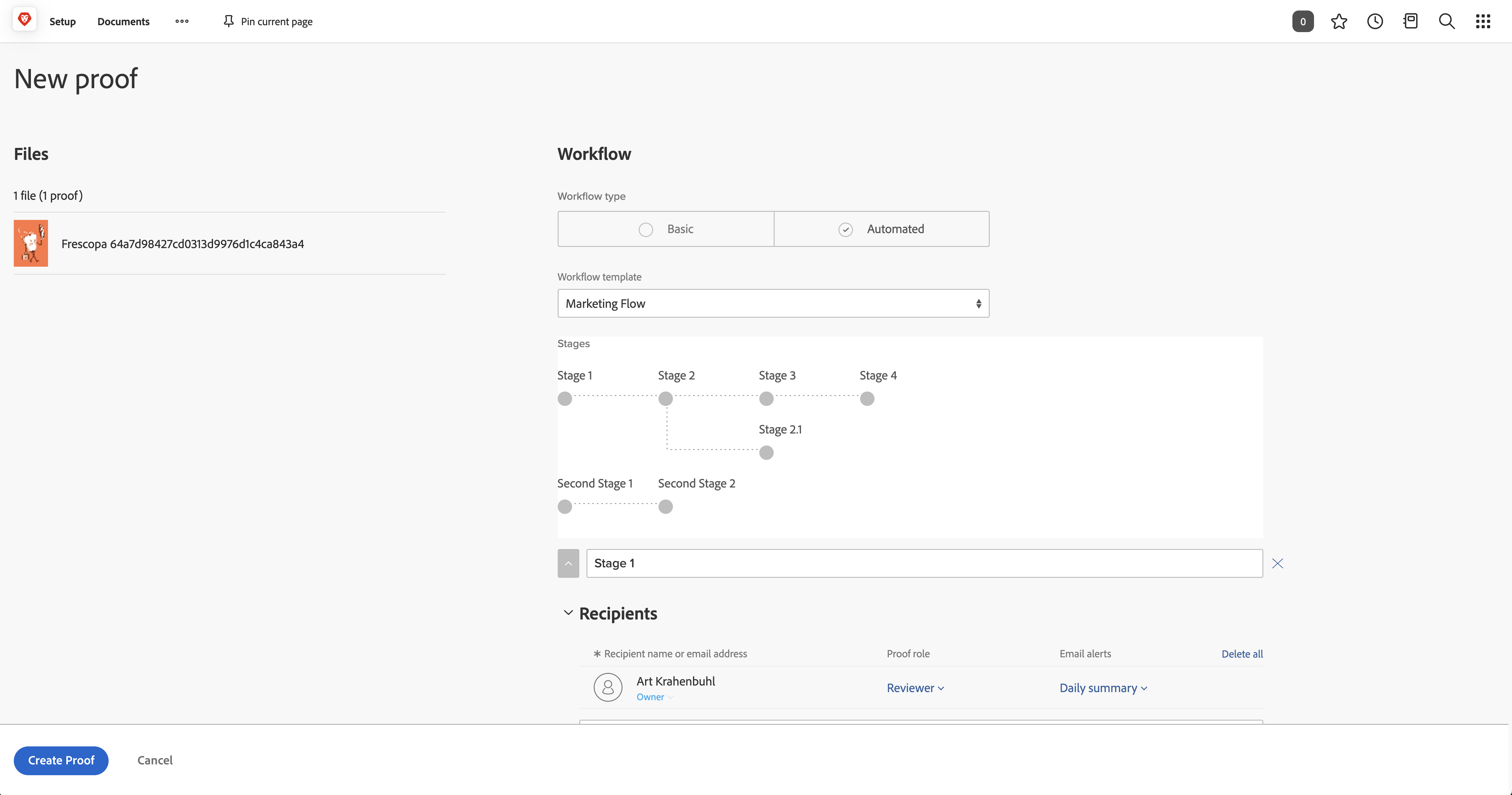
This wasn't a greenfield redesign. It replaced Workfront Proof, an approval platform enterprises had run on for more than fifteen years. Nobody loved its interface. They trusted its depth: sequential and parallel routing, decision modes, role-based participation, private and locked stages, template-driven workflows, and an audit trail that compliance teams had built real process around.
Rip that out and you don't ship a better product, you break the customer. So the order mattered. Match the depth first, exactly, then fix what had been broken for years.
That constraint set up the tensions the design had to hold at once. Creatives wanted room to work before anyone saw it; operations wanted visibility into whether anything was moving. Creative review is informal and iterative; enterprise approval is formal and auditable. Templates had to be strong enough for compliance and light enough that people would actually use them.
Flexibility against governance was the one that bit hardest, because the same feature had to give both at the same time. Frame.io is creative-first and almost ungoverned. Workfront is structured and built for the enterprise. The job was one model that didn't force either side to give up what it came for.
Preserve the moat. Fix what had been broken for years.
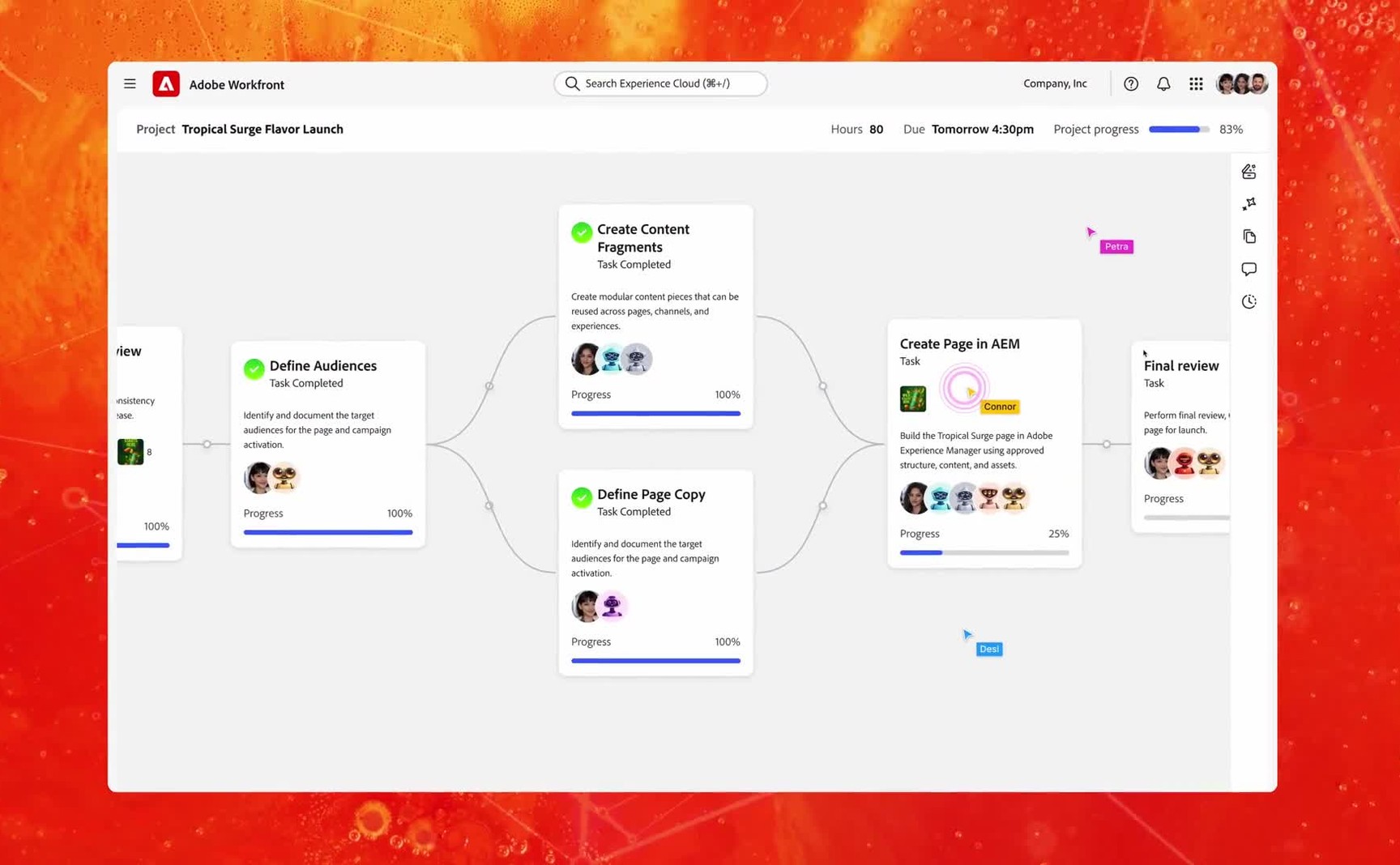
The engine sits in Workfront, where the work lives and where a decision changes the state of that work. The viewing surface is wherever the asset makes sense: Frame.io for frame-accurate video review, GenStudio for generated variants at volume, Express for a decision that should take three taps, and Creative Cloud where the assets and their version stacks already live. One engine, different surfaces.
That only works because approval isn't one workflow. Research surfaced flows ranging from a single approver in Express to twenty-two stakeholders spanning legal, compliance, executive, marketing, and regional groups in Workfront. You can't force one shape on a range like that, and you can't ship two products either.
So the model scales by degrees instead. Simple reviews stay light. Enterprise workflows keep sequential routing, parallel stages, dependencies, role-based participation, conditions, and full auditability. Same underlying model, different amounts of it exposed.
Where the approval engine lives, and where regulated teams need the depth.
Video and motion, tied to timecodes and version stacks.
Approval keeps pace with generated variants without losing accountability.
A decision that feels like a few taps, not a workflow.
Not a review surface. The storage the other four sit on, so an approval points at the real asset and its version stack instead of an exported copy.
Templates are authority, so move who holds them
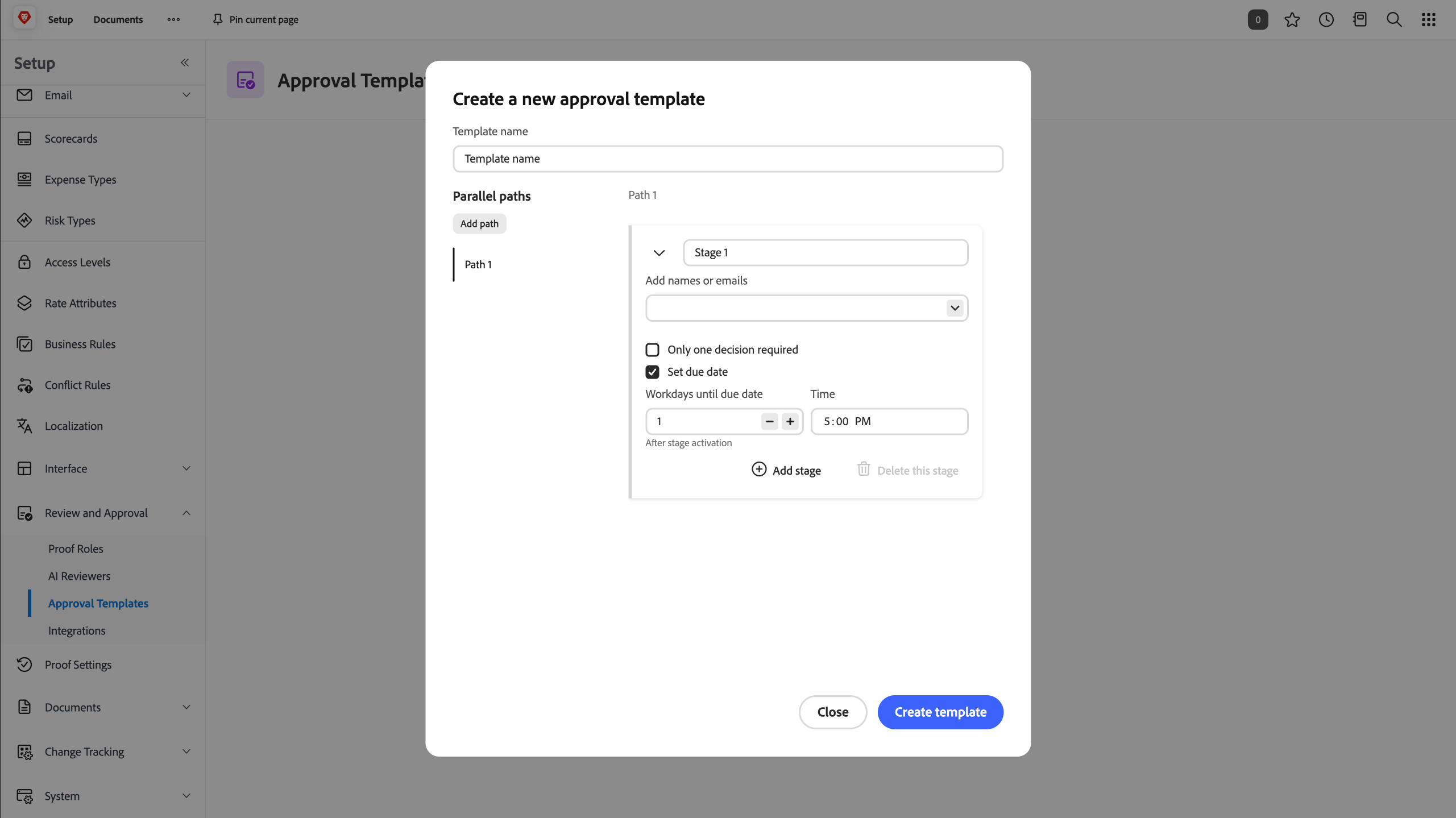
A template isn't a convenience feature. It's how a brand stays consistent across hundreds of people who never meet, carrying in-stage review roles, decision-completion models, routing, private groups, locks, guest reviewers, and the audit trail behind all of it.
Proof's depth carried forward intact. What changed is who can wield it. Template power moved out of the administrator's hands and into the team's, without thinning what enterprise customers had built their process on.
Parallel approvals wasn't on the roadmap
Proof let different groups review the same work at the same time. The native replacement was scoped sequential only: one group, then the next, each waiting on the last. On a roadmap that reads like a reasonable cut. On customer calls it had been reading as a dealbreaker for months.
So I raised it in an enterprise advisory board session and asked the room how much parallel approvals actually mattered. More than half said they wouldn't adopt without it. It went on the roadmap.
The interesting part isn't the vote. It's that the answer didn't surprise me and did surprise leadership. Continuous customer contact was simply ahead of the roadmap, and the board confirmed in one room what I'd already heard in many. I designed the model behind it: paths that run in parallel, stages inside a path that run in sequence or all at once, and dependency rules that block the circular ones. It was built and released.
From design model to shipped system
To get from model to something engineering could build against, I built an AI-assisted React proof of concept in Adobe Spectrum 2. It ran the end-to-end flow: document selection, staged routing, template-driven workflows, visibility, and post-request state. Alongside it I wrote the documentation that turned design intent into workflow rules, interaction behavior, component expectations, and edge cases.
That combination is what made the work buildable. A real proof of concept carries more intent than any mock does, and it gave engineers and AI coding tools enough context to produce production-aligned flows with less rework.
The video here is a field report on one week of working that way. The feature we built that week was parallel approvals.
Plenty broke along the way. We told the agent to reuse existing components and it grabbed a set built on an old design system, so version one was a mess until we caught it. Tests went green while the experience wasn't ready: missing edge cases, reset behavior, disabled states, the things only a human eye catches. Green tests aren't readiness.
The lesson generalizes past this project. AI raises the cost of ambiguity, so lowering ambiguity is the job now. The craft isn't going away. It's moving.
It shipped in April 2026 as Adobe Unified Review and Approval, available to every Workfront customer. Frame-accurate commenting for video, more than forty file formats on one review surface, multi-stage approval workflows, and shared enterprise storage that removes the download-and-reupload shuffle entirely, because there's nothing left to shuffle.
I didn't just design the experience. I made the workflow legible enough to build.
This is the first page of a trilogy, and the shipped one.
Unified Approvals is a governance layer for human execution: someone proposes, the system routes, a decision gates what ships, and the record holds. AI Collaborators brings agents into that same system as participants who can be assigned work and held to it. And the question that raises, what an agent is allowed to do right now and on whose authority, is what my Delegated Authority Framework exists to answer.
Same argument at three scales. People, then agents, then the authority underneath both.
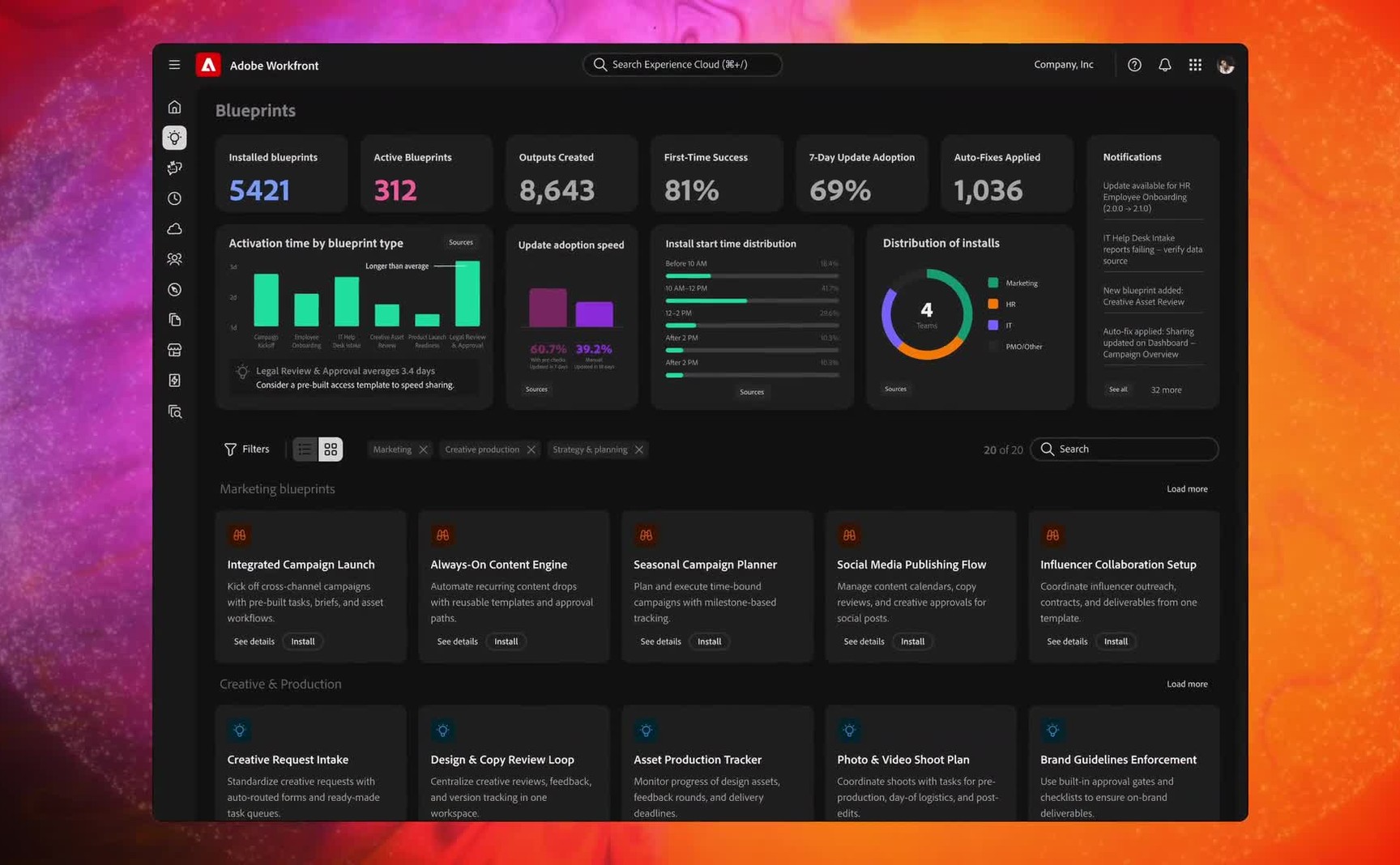
The pattern started earlier than this, on Workfront Blueprints in 2021: package what works, govern it, then let people build on it instead of rebuilding it.
Where the pattern started.
Workfront BlueprintsAgents as assignable participants in this system.
AI CollaboratorsThe authority layer underneath it.
Delegated Authority FrameworkThis page is the story. The dossier is the record.
The full dossier carries what the page compresses: the complete architecture, the decision log with what each call traded away, nine verified research citations, verbatim customer quotes, and a precise map of what was mine versus the team's versus Adobe's. Written for the AI you'll paste this page into. Open to everyone.
www.arnoldp.com/dossiers/unified-approvals.md- Workfront
- Frame.io
- GenStudio
- Express
- Creative Cloud